A love letter to the land.
Forage Bali shares the living connection to a place that is truly unique. Not just the beautiful beaches, but the plants, the traditions, the way ancient knowledge still shapes daily life. A thousand years of knowledge, still alive, still delicious.
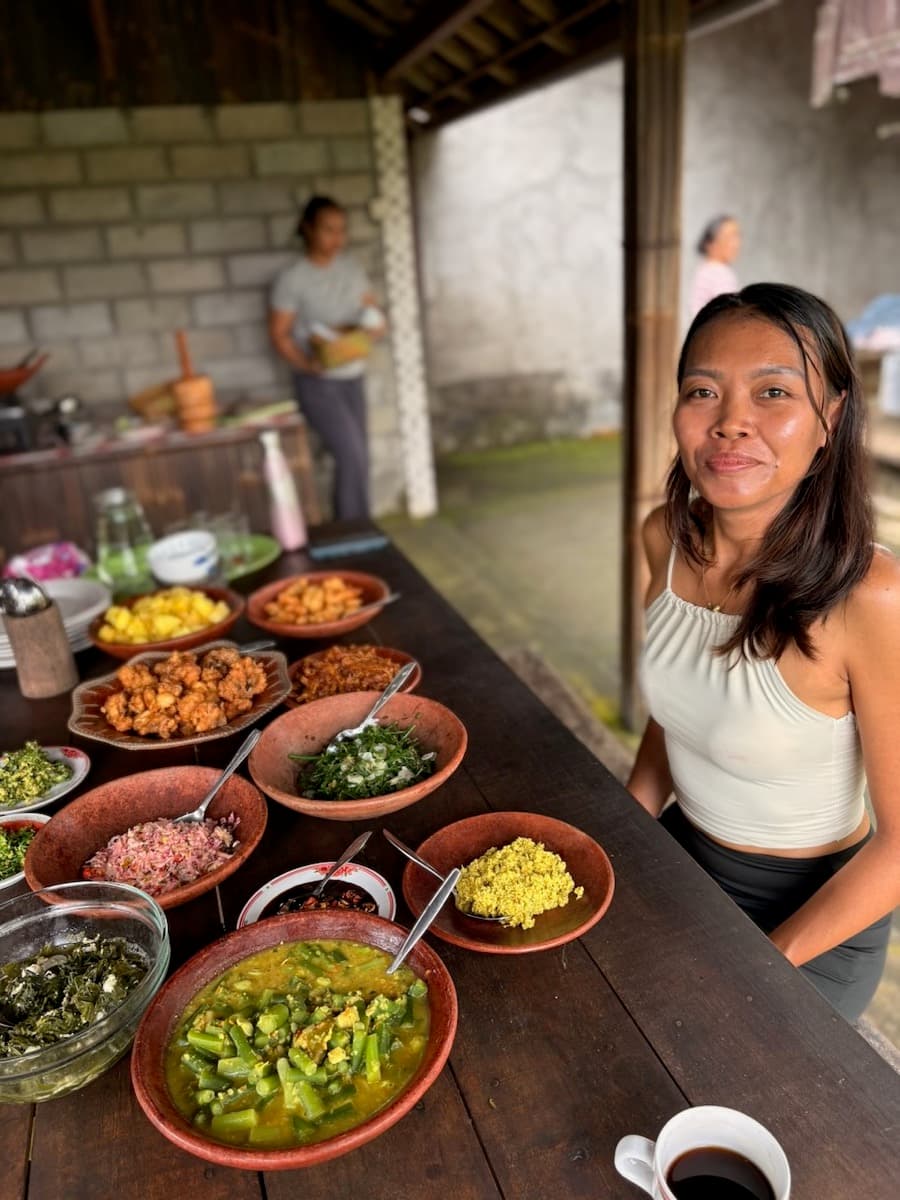
“Our mission is to help the world understand the foundation of what makes Bali so special. The more people know about nature, the more they protect it.”
Our mission
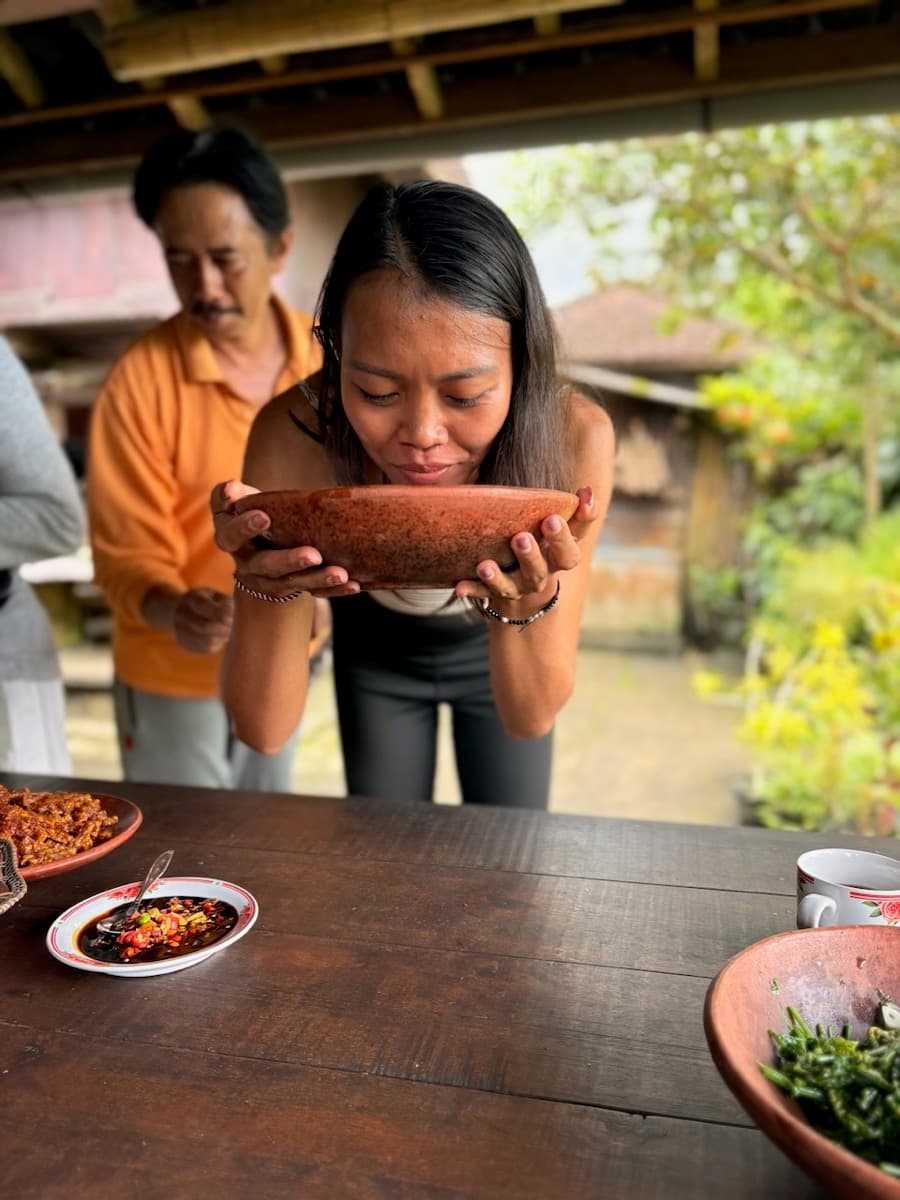
Yuka
Forage Bali was founded by Ayu Karang (Yuka) as a love letter to her home. Born and raised on a farm in Sidemen Bali, she grew up watching her father climb trees to collect wild honey, playing in rice fields, and walking home at dusk with fireflies lighting the path.
She's watched Bali change over her lifetime: more visitors every year, drawn by something they can't quite name. Her mission is that they find it. Not just the beautiful beaches, but the living connection to a place that is truly unique.
She founded Forage Bali to share that depth with the world, and found in Made someone who carries that knowledge in her bones.
Made
Made was born and raised in Bali. A chef by training, she's always been in love with the living history of her home: the plants, traditions, rhythms, and ancient knowledge that still shape daily life on this island.
She's been leading foraging walks for years, sharing her love of the land's culinary secrets with the world. She's also one of the engines behind the Slow Food movement in Bali.
A class with Made stays with you. Her love for this place is contagious, you'll leave not just with new knowledge, but with some of her fire for the land that shaped her.
A thousand years of knowledge, still alive, still delicious.
Her philosophy: “Community, not commodity.”
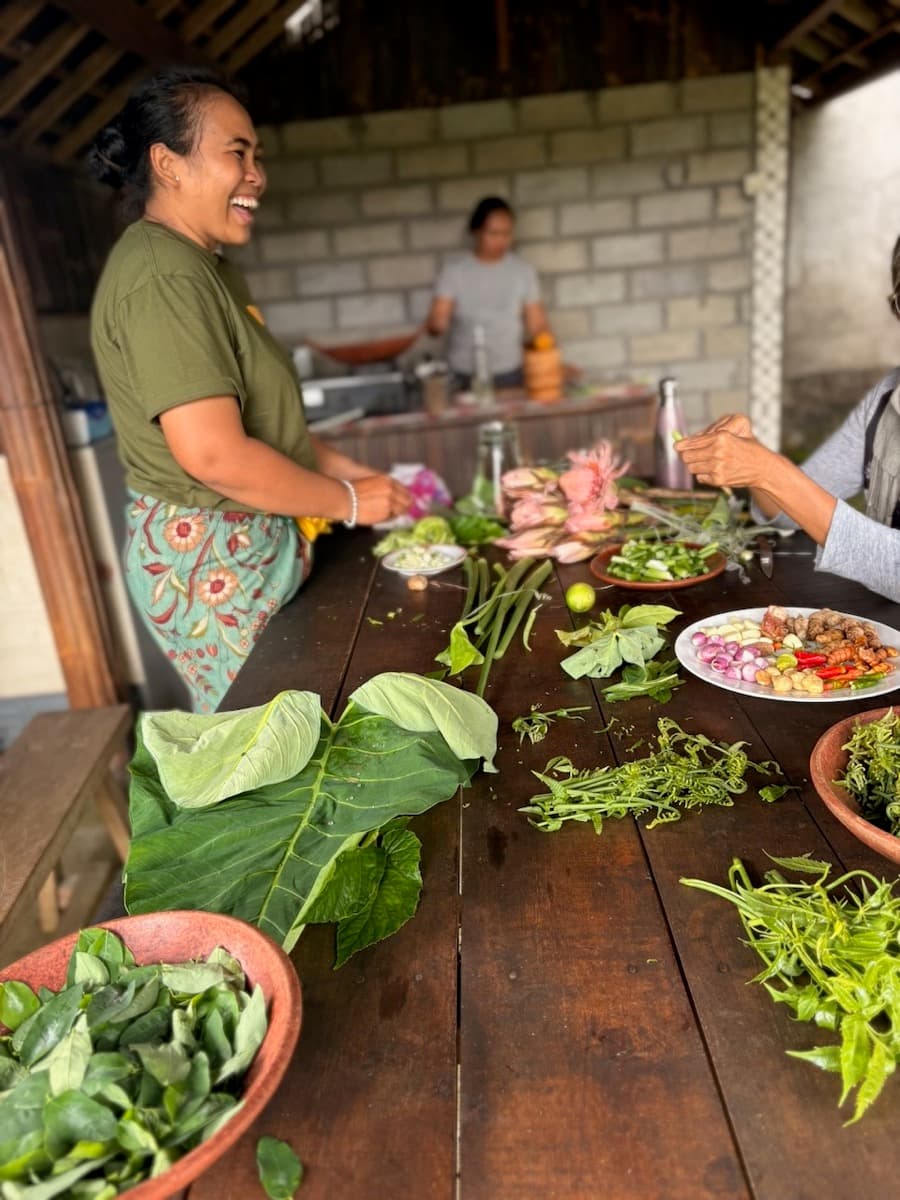
Why Learn Traditional Foraging?
Bali's forests still hold the wild foods that have fed people here for centuries. But as the island changes quickly, this knowledge is becoming rare.
Our guides are Balinese. They learned these practices from their families in the same food forests where they teach. When you forage with them, you're not just learning to identify plants. You're understanding what makes Bali special: the way people here have always lived close to the land, harvesting respectfully, cooking together, and passing knowledge down through generations.
This is traditional knowledge you won't typically find anywhere else. It's cultural depth beyond the beautiful beaches. It's Bali's living history, still practiced, still delicious.
What we teach
- Traditional Balinese foraging practices passed down through families
- Seasonal edible plants and their Balinese names
- Sustainable harvesting and respectful gathering
- Traditional preparation and cooking techniques
- The living cultural history behind Balinese food
- How Balinese families have lived with the land for generations
Why it matters
Bali's landscapes are changing quickly. As the island grows, traditional knowledge is becoming rare.
We believe this cultural knowledge is priceless. That sharing it builds appreciation, and appreciation builds care. Each adventure supports a more sustainable relationship with the island and a deeper understanding of Balinese culture.
What we offer isn't just a class. It's an immersion into a way of life that has sustained people here for centuries. A chance to understand what makes Bali truly special, beyond the beautiful beaches and resort experiences.
A thousand years of knowledge, still alive, still delicious.